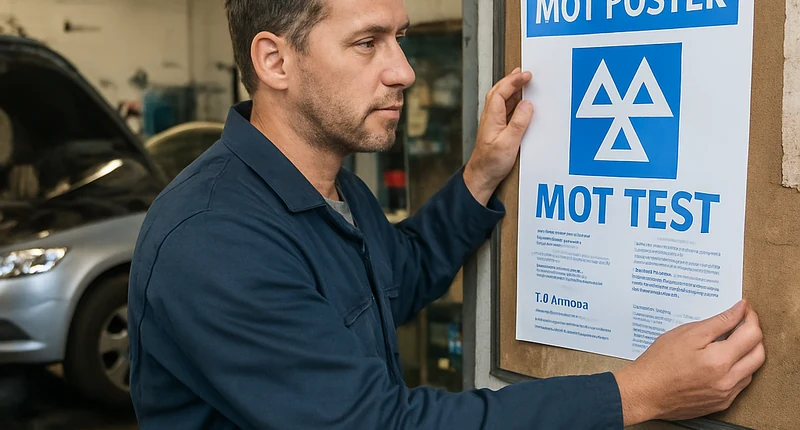


An operational guide, not a new test standard
The GOV.UK MOT testing guide is principally a rulebook for running an authorised test station. Its stated scope includes who can become an authorised examiner or tester, the facilities and security a station needs, training, testing-service user roles and the responsibilities attached to operating within the scheme.
That is different from the inspection itself. The entry says the inspection manuals for cars and passenger vehicles, and for motorcycles, set out the processes and standards for the MOT test. For motorists, this distinction matters: a guide update should not be assumed to mean that a new defect criterion or test procedure has been introduced.
The page entry carries the date 22 September 2026. The supplied information does not describe a particular amendment or compare the guide with an earlier version. It would therefore be misleading to present that date as the launch of new requirements. A station checking for a specific change should consult the relevant dated update or the relevant section of the current guidance.
What it asks of test stations
The contents show that the guide reaches well beyond the moment a vehicle is inspected. It addresses applications and eligibility for authorisation, site requirements, mandatory roles, tester training and keeping knowledge current. Its appendices also cover facilities, security, equipment calibration, training records and tester qualifications.
It also describes administrative and compliance matters: documentation, test certificates, accounts and fees, security of the MOT testing service, contingency testing and disciplinary procedures. These topics affect the day-to-day ability of a station to test and record vehicles properly. For operators, the practical task is to match their procedures and staff responsibilities to the applicable sections, rather than rely on a headline summary.
The guide lists routes for vehicle presenters to appeal a refusal to pass a test or complain about a decision to pass one. That is useful context for motorists, but it does not establish the outcome of any individual dispute. The stated overview points readers towards the relevant process; it does not replace case-specific advice or the full rules.
What drivers should take from it
For most car owners, the guide is not a checklist for preparing a vehicle or a substitute for the car inspection manual. Its relevance is indirect: it sets out the framework under which stations and testers are authorised, trained and accountable. A driver concerned about an MOT decision should use the stated appeal or complaint route, while checking the applicable instructions rather than assuming that an update date changed the test.
The guide explicitly applies to England, Scotland and Wales. The supplied entry does not establish the corresponding rules for Northern Ireland, so drivers and businesses there should not assume that this page alone describes their arrangements.
Its scope also includes vehicle types and scheme processes beyond an ordinary passenger-car test. That breadth is a reason to read the relevant section, not to infer that every provision applies in the same way to every station or vehicle. The source overview does not provide enough detail to state a particular new fee, deadline or technical requirement.