Search by place, full postcode, MOT centre, vehicle manufacturer or model.
How to read a used car’s MOT history before you buy
A free GOV.UK check can show test results, defects and advisories. Look for repeated issues, but treat a gap in the record as a prompt to ask questions, not proof of a problem.
MS·
Editorial illustration
Key points
The GOV.UK MOT history service can be used free of charge.
MOT records can show test outcomes, defects and advisories.
A gap in the record does not automatically mean there is a problem.
Compare recurring MOT advisories with service records and ask the seller about unresolved concerns.
Start with the official record
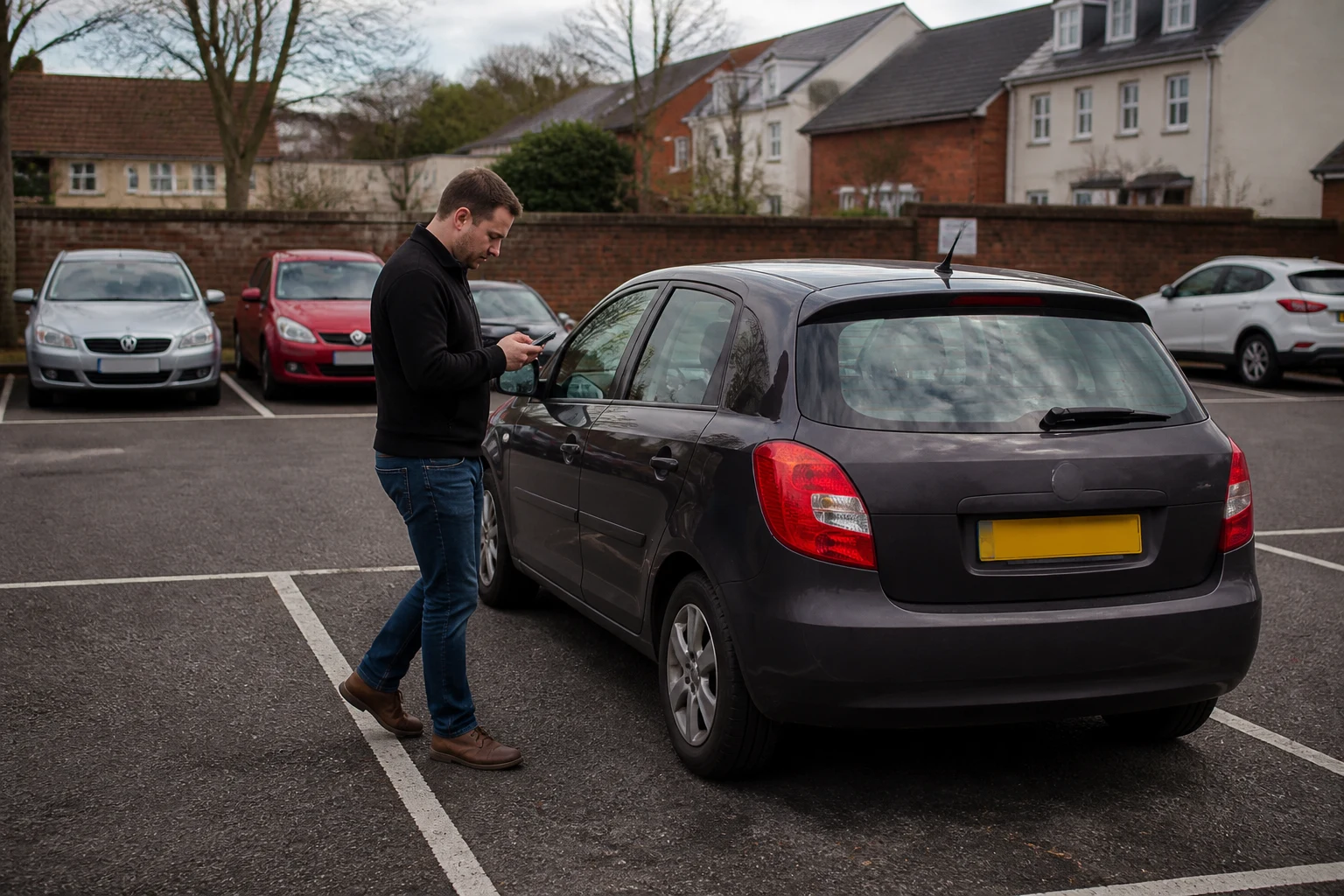
Before buying a used car, use the free GOV.UK MOT history service and check that the vehicle details shown match the car you are viewing. The record can help you review whether its MOT is current and see recorded test results, failures, defects and advisories.
An MOT records the vehicle’s condition when it was tested. It is not a substitute for service records, which can help show whether routine maintenance followed the manufacturer’s recommendations. Read both together for a fuller picture of the car’s recorded history.
Look for patterns, not just gaps
Compare the latest result with earlier tests. Repeated references to the same issue, or failures for the same fault, are reasons to ask what work has been done. A single advisory is not necessarily a concern, but a recurring one may point to an issue that has not been fully dealt with.
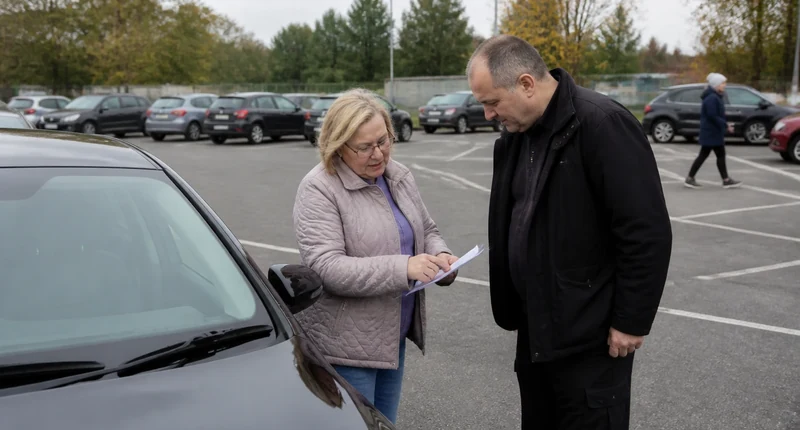
A break in the MOT record does not by itself explain why testing stopped. The vehicle may have been unused or undergoing repair, among other possibilities. Ask the seller about a substantial gap or a repeated concern, and request supporting paperwork where available. The record alone cannot confirm the reason or whether a repair was completed.
What this means when viewing a car
Use the history as a guide for specific questions: do earlier advisories appear to have been resolved, and do service records support the car’s claimed maintenance? If details do not match the vehicle, investigate further before relying on the record. A seller’s explanation and any paperwork can help clarify concerns, but the supplied guidance does not establish a car’s present condition from its MOT history alone.
What this means
Used-car buyers can use the official MOT history service to check recorded test information before deciding what to ask the seller. The practical value is in comparing results over time: recurring advisories or failures merit follow-up, while a service history can help show whether routine maintenance was carried out. A gap alone does not establish why the vehicle was not tested, so the reason remains uncertain unless the seller can explain it or provide supporting records.
Frequently asked questions
Does a gap in MOT history mean the car has a problem?
Not necessarily. A gap does not show its cause on its own, so ask the seller for an explanation and any supporting records.
What should I compare in the MOT history?
Compare the latest result with earlier tests, especially recurring advisories or failures, then check whether service records support the maintenance history.
Found an issue with our data, noticed something that needs correcting, or have feedback about MOTSTATUS? Send a short message to the project team.
Contact MOTSTATUSWebsite problems, incorrect listings, data corrections, partnerships and suggestions.
Contact the MOT centre directlyFor bookings, prices, opening hours, test results or complaints about a particular garage.
Website development and technical administration: Mars Webdesign. MOTSTATUS is an independent project, not a DVSA service.
About MOTSTATUS
MOTSTATUS is an independent UK vehicle information and MOT centre directory. We bring official records, carefully calculated statistics and local comparisons together to make MOT information easier to understand and use.
Official data, clearly attributed
We work with published DVSA MOT records and test centre information, vehicle reference data from DfT, and location data from Ordnance Survey. The original authorities remain the source of their data.
Independent calculations
We normalise vehicle labels conservatively, calculate test-based pass rates and mileage summaries, and compare centres using mapped locations. Statistics are not an assessment of any particular vehicle or garage.
Local MOT centre research
Find authorised MOT centres, check their listed vehicle classes and contact details, and explore nearby alternatives. Test fees are shown as government maximums, not individual garage quotes.
MOTSTATUS is not operated by DVSA or DfT and does not carry out MOT tests or take bookings. Important MOT status, prices and availability should be confirmed with the official service or testing centre.
Our work draws on experience with Czech vehicle inspection directories and vehicle-history statistics. Related projects include STK mapa, focused on technical inspection stations, and Kontrola tachometru, focused on vehicle records and mileage analysis. These are separate services; their experience informs our approach, not the accuracy of any individual UK record.
Transparency: we distinguish supplied official records, independently calculated figures, visitor submissions and third-party map or photographic material. No user rating is a DVSA assessment.
Data and resources
We combine official vehicle and location datasets, then carry out our own validation, normalisation, statistical analysis and calculations. The following sources serve different purposes and are not interchangeable.
Annual MOT test results
Anonymised DVSA test outcomes, mileage readings and recorded failure items. Used for annual model statistics.
Editorial MOT articles link to their sources, distinguish our independent interpretation from official announcements and mark AI-generated illustrations accordingly.
Use of the service and the information we process.
An independent information service. MOTSTATUS is not a government website, the DVSA, DfT or an MOT testing station. We do not conduct tests, issue certificates or book appointments.
What this website provides
MOT history lookups, a directory of MOT centres, published government maximum fees, independent comparisons, visitor ratings and aggregated vehicle statistics. Availability and functions may change as source data and services change.
Accuracy and appropriate use
Although we take care with data processing, imported source records, inferred locations, external websites and visitor ratings may be incomplete, outdated or wrong. Driving distance is only shown when a route has been calculated; otherwise distances may be approximate straight-line measurements. Check MOT status directly with GOV.UK, and confirm opening times, eligible test classes, bookings, addresses and actual fees with the station before travelling.
Editorial articles and illustrations
Our MOT news and guides may be researched, drafted and checked using automated AI tools against attributed public sources. This verification process cannot guarantee that every statement is correct or that an article has received individual human editorial review. We aim to add original interpretation and clear links to primary information. Generated cover pictures are labelled as editorial illustrations, not photographs of actual identified MOT centres. For legal requirements and current decisions, consult the linked primary authority.
Statistics and ratings
Model pass rates describe historical MOT test results, not a probability that a particular vehicle will pass. Visitor ratings are voluntary opinions and are not a government inspection or an independently verified quality assessment. Neither should be used as the sole basis for a purchase, repair or safety decision.
Reminders and your account
Optional MOT reminders depend on the current data available and successful email delivery. They are a convenience, not a substitute for checking the legal MOT expiry. You are responsible for keeping vehicle details and the email address correct and for safeguarding access to your mailbox or signed-in browser. You can remove a vehicle or stop reminders from your account.
Third-party content and permitted use
Source datasets, images and maps retain their respective rights and licensing terms. Do not attempt unauthorised access, scrape abusively, overload or interfere with this service. External providers control their own websites and services.
Liability
To the extent permitted by applicable law, we do not guarantee uninterrupted availability, accuracy or fitness for a particular purpose, and are not liable for losses caused solely by reliance on inaccurate or incomplete information. Nothing excludes or limits any liability or consumer right that cannot lawfully be excluded, including liability for fraud or death or personal injury caused by negligence.
Questions about the service: .
Privacy by purpose. MOT searches do not require an account. If you opt into MOT reminders, we process the minimum information needed to set them up, maintain them and provide secure access.
What we process and why
For vehicle lookups, a number plate or VIN is supplied to the DVSA lookup service to retrieve the requested history. For internal service statistics and support, a successful vehicle lookup also creates a record containing the vehicle's registration, make, model, search method, number of MOT tests and the time checked. We do not store the visitor's full VIN, email address or IP address in this short-lived lookup log. Lookup activity is kept for approximately 30 days, is accessible only to authorised administrators and is not used for promotional contact; it does not identify the person who searched. For optional reminders we use your email address, registration, make and model, MOT expiry and recent test information, selected notice intervals, account tokens and limited confirmation/delivery records. Your confirmation is the basis for reminder emails; operational security and abuse prevention are carried out to protect the service and its users. We do not use reminder consent to send advertising.
How the reminder account works
A confirmation link is required before a vehicle is activated. Access links and sessions use random security tokens; the database stores token hashes, not the original tokens. You can manage or remove individual vehicles and stop reminders. A signed-in browser may keep access for up to 24 hours unless you sign out sooner; on shared devices use Sign out.
Contact enquiries
If you contact MOTSTATUS, we process the name, email address and message that you provide to respond to your enquiry. Messages are delivered privately to the technical project administrator, Mars Webdesign, through our contact form. We do not use these messages for marketing. Technical anti-abuse checks may temporarily process your IP address and contact-form session token; the message is not added to the public directory.
Cookies, ratings and technical records
Essential security cookies support the lookup and reminder forms. A visitor rating may use a random browser identifier to limit repeated voting; this is separate from a government rating. Technical logs and rate limits may include IP address, request time and path. Short-lived lookup caches reduce repeat calls to external services.
Editorial source handling
For published articles, we may access public third-party editorial webpages and share limited relevant extracts with an AI service to prepare and check source-grounded commentary. Those source documents are not personal reminder records. Generated editorial images may be produced using an AI image service. Sensitive reminder-account information is not supplied as material for editorial article generation.
Other providers
DVSA supplies vehicle history data. Map tiles and licensed images may involve OpenStreetMap or Wikimedia Commons; navigation links may open Google Maps. If you explicitly choose the nearby-centres location feature and grant browser permission, your coordinates are sent over HTTPS to MOTSTATUS to retrieve nearby test centres on the same page. They are not saved to our vehicle or reminder databases or included in the page URL. Email delivery uses the hosting mail service. Providers may receive technical connection data according to their own policies. The website does not intentionally publish reminder subscriber email addresses.
Retention and your choices
Successful vehicle-search event records are removed by scheduled and ongoing clean-up after approximately 30 days. Pending confirmation links expire after 24 hours; email-access links and session tokens expire according to their specific purpose. Active reminder records remain while you use the service, subject to operational maintenance and applicable retention needs. Removing a vehicle stops its reminders; limited delivery, security and consent records may be retained where necessary. You can ask about your personal information or request access, correction or erasure, subject to applicable law.
Data controller and privacy contact
For privacy requests, use our .
Your rights
Where the UK GDPR applies, you may have rights to access, correction, erasure, restriction or objection, and to complain to the Information Commissioner’s Office. These rights are subject to applicable legal conditions.
MOTSTATUS research
Statistical methodology
Definitions, calculations and limitations.
We process anonymised DVSA annual MOT extracts, retain the published outcomes and derive aggregated results. The make and model catalogue uses DfT/DVLA reference mappings, with additional normalisation limited to unambiguous, verified formatting matches. Ambiguous labels are not assigned automatically.
01 / Denominator
Initial normal MOT tests
N = P + F + PRS
P is an initial pass, F a fail and PRS a repaired-and-passed result. Other test types are excluded from this denominator.
02 / Success
First-time pass rate
Rpass = 100 × P / N
This is the share that passed without an initial failure or repair-at-test outcome.
03 / Initial failure
Initial failure rate
Rfail = 100 × (F + PRS) / N
Repaired-and-passed tests count as initial failures, not first-time passes.
04 / Test mileage
Average odometer reading
x̄ = Σ mi / nvalid
We exclude missing and zero readings. This is the average reading at an MOT test, not distance travelled during the year.
05 / Aggregation
Manufacturer and model totals
Rmake = 100 × Σ Pm / Σ Nm
Rates are weighted by included test counts. We never average model percentages without their denominators.
06 / Failure items
Recorded faults
Cfault = Σ occurrences
One test can contain several faults. Fault occurrences are not a count of unique vehicles, and their sum must not be treated as a failure rate.
Station locations, classes and prices
Nearest listed centres
We calculate approximate straight-line distance from mapped British National Grid coordinates: d (miles) = √[(E₂−Eâ‚)² + (N₂−Nâ‚)²] / 1,609.344. Road distances, where separately calculated and cached, are different. Coordinates may represent postcode reference points, not garage entrances.
Nearby localities
We group the nearest centres already retrieved for a profile by their imported place identifier. The count and combined vehicle classes refer to that sample, not every centre in the locality. Distance is to the nearest included station for each place.
Approved test classes
Class labels come from the station record and are translated into broad vehicle categories for readability. Eligibility still depends on vehicle weight, seating, construction and the station’s current approval.
Maximum MOT fees
Published prices are statutory maximum MOT test fees from GOV.UK, not quotes from an individual MOT centre. Our fee-check tool can compare the GOV.UK schedule with our published table; unrecognised source changes must be reviewed before replacement.
Publication and comparability
We show results only from completed and published annual imports, with the latest successfully normalised year selected automatically. Subsequent years are shown as distinct reporting periods. Our model names and coverage reflect conservative reference matching. Coverage is not identical across makes and should not be interpreted as the full registered fleet.
Age groups are estimated from the available registration information. Mileage ranges aggregate source readings; unknown or invalid readings are not imputed as zero. Changes to MOT regulations and fault classification, particularly around 2018, can reduce comparability with older years.
These are descriptive statistics, not adjusted causal measures of reliability. Vehicle age, usage, maintenance and the tested fleet composition all affect results. See for the official sources.
MOT test information
Check your email
We sent a confirmation link to .
Reminder requested for
Open the message and select Confirm email and vehicle. Your reminders will only be activated after confirmation. The link expires in 24 hours.
Can't find the email? Check your spam, junk or other folders. If it arrived there, mark it as Not spam to help future messages reach your inbox.
Access your vehicles
Enter the email address you used for MOT reminders. We will send a secure link to your private vehicle dashboard.
For your security, access links expire after one hour. This form never reveals whether an email address is registered.
Check your inbox
If this address is registered, we have sent a secure sign-in link. Open it to manage all your vehicles.
Also check your spam or junk folder if the message does not arrive.