
Recurring faults remain a maintenance priority
At the Transport Manager conference, Logistics UK chief of staff Michelle Gardner said truck and trailer test performance had improved over time, but familiar faults continued to appear. The reported failure rates were 6.7% for trucks and 5.9% for trailers.
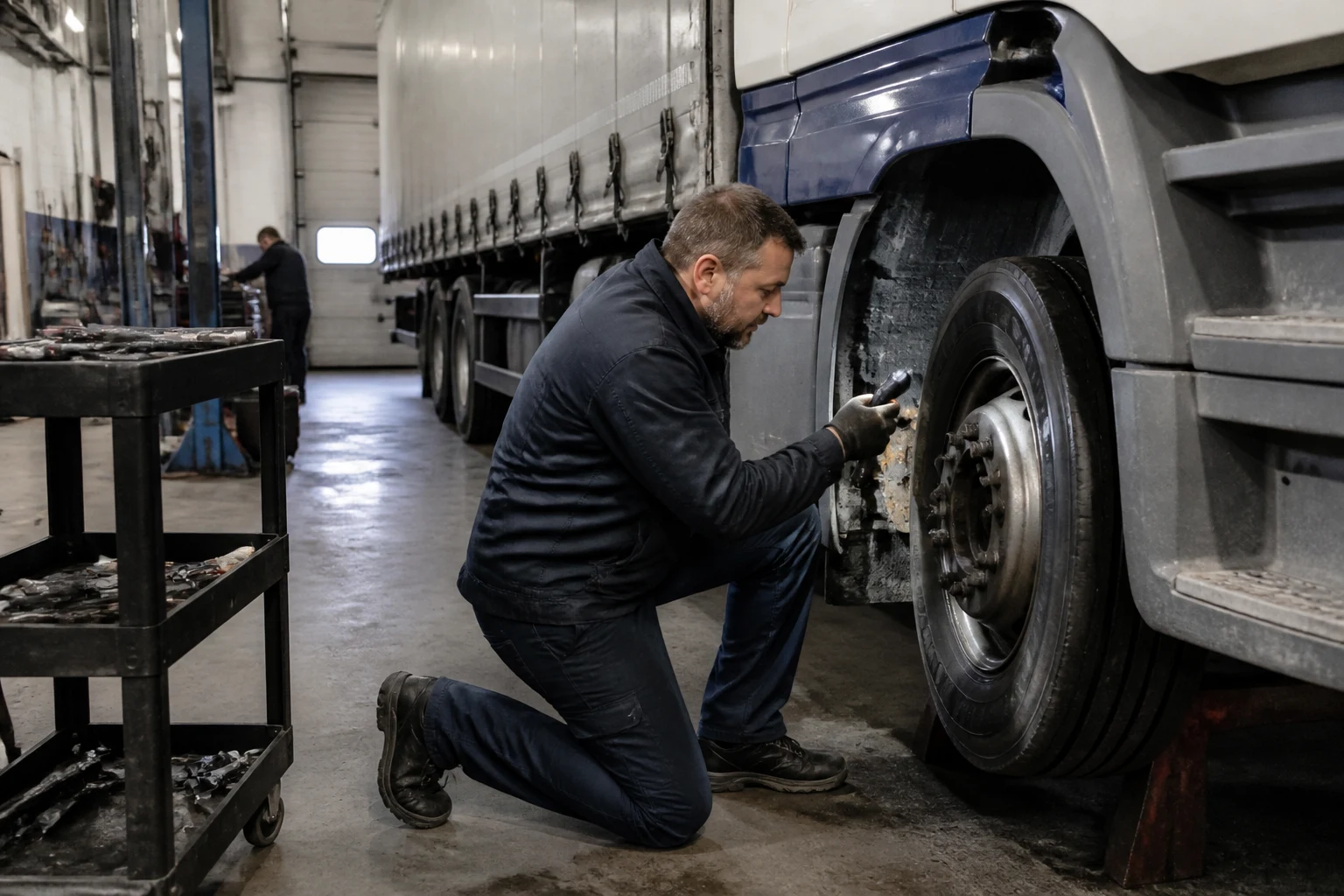
Brake components topped the recurring-defect lists for both vehicle types. For trailers, service-brake performance and suspension were also among the leading reasons for failure, and three of the six most common trailer failure reasons related to brakes. The report also lists tyres, lamps and chassis condition among trailer concerns.
Testing, enforcement and maintenance checks
The conference report says DVSA had inspected 27,000 targeted vehicles at the roadside, with one in five receiving a roadside prohibition. More than one in four vehicles that were weighed received an overweight prohibition. These are figures reported at the conference, not ordinary passenger-car MOT failure rates.
The speaker said ADAS systems, including lane-departure warnings, were being assessed at annual tests. At the time described, a system that did not work did not cause a test failure or affect the operator’s OCRS. She advised operators to include such systems in checks and maintenance, while warning that the position might change.
DVSA’s separate Great Britain enforcement collection describes roadside and operator-premises checks. It says a prohibition prevents driving until the vehicle problem is fixed, and that police or DVSA officers can issue fixed penalties for offences. The collection is not classed as an official statistic, so its figures should not be presented as official statistics.
What this means for operators
Fleet operators can use the recurring-defect lists to focus maintenance reviews, particularly on braking systems, while keeping evidence that their maintenance practice is effective. The conference speaker said outsourcing maintenance does not transfer the operator’s responsibility for roadworthiness. For trailer electronic brake performance monitoring, she said parking-brake effectiveness still had to be physically measured and recorded.